
Reminisce
Key recovery that starts with memory
Ways to regain access after losing a key. Three approaches to making storage and recovery easier.
The challenges of self-custody and custodial storage
Keeping your own keys means preparing for loss; entrusting them to someone else creates dependence on a third party. Reminisce investigated how personal memory could help recover cryptographic keys. Explore the experiments and limitations of three research approaches: identity verification, memories of photographed places, and multiple phrases.
Three approaches
Third-party authentication and multisig
Explored combining mobile identity verification with multisignature recovery. The approach sought to reduce outside dependence and costs, but faced different national verification systems and limits on international use.
Photos and memories of places
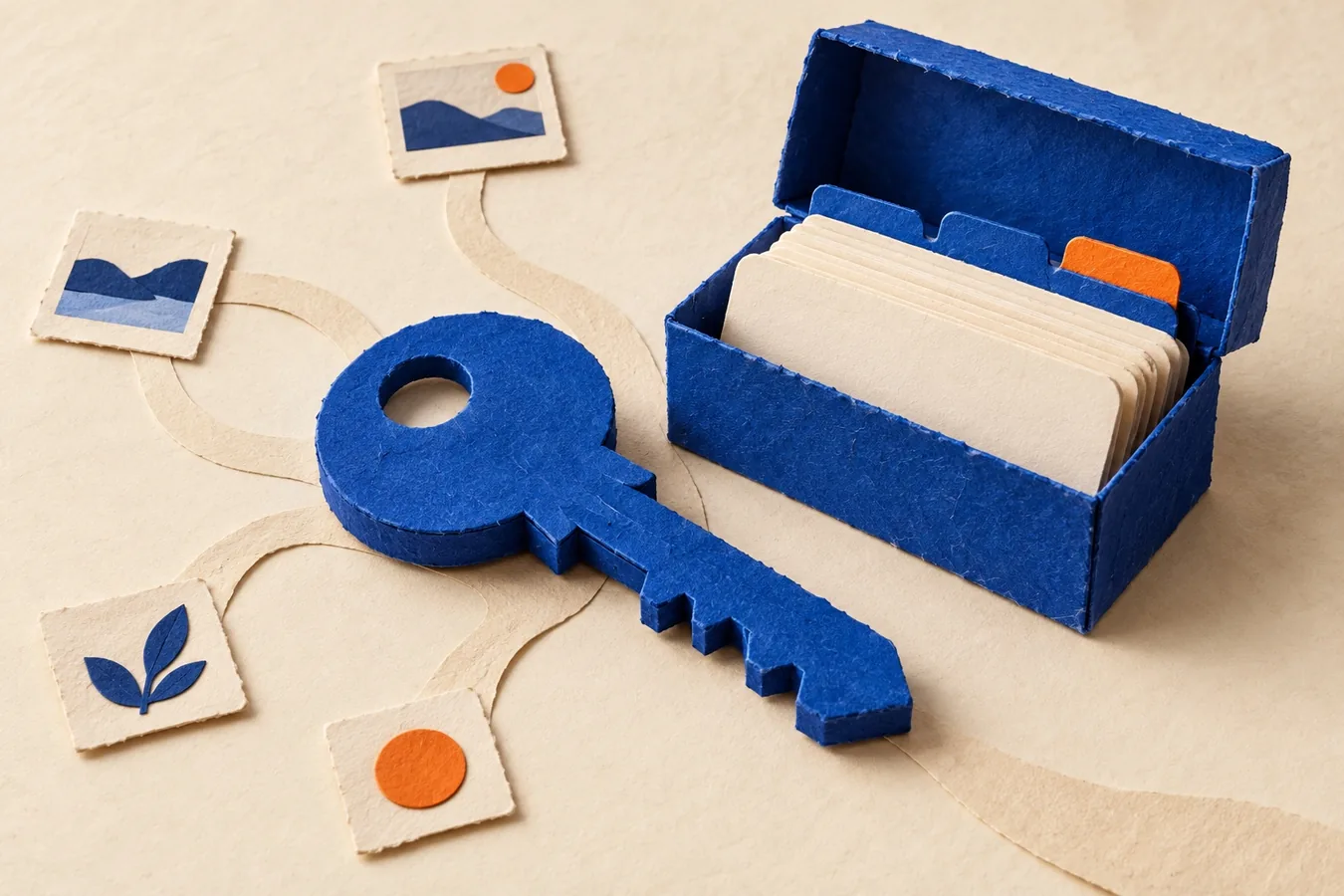
Used a person’s memory of where photos were taken for key generation and recovery. Questions included tolerances for location recall and dependence on mapping services.
Multiple phrases and Taproot
Follow-up research explored three or more phrases together with Taproot. Alongside increasing randomness, it considered the continuing limitation of remembering information over time.